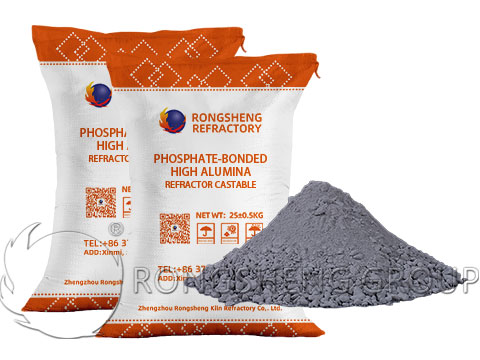
Refractory materials can be categorized by application into: metallurgical refractories, cement refractories, glass refractories, and other refractories. Ceramic refractories are classified as other refractories, while building and sanitary ceramics are a branch of ceramics. Refractory materials are further divided into shaped and unshaped refractories. Unshaped refractories are generally used more in cement and metallurgical kilns, while the glass and ceramic industries use relatively little. Unshaped refractories, especially refractory aggregates, refractory castables, and refractory binders, play an invaluable role in the construction of some ceramic kilns.
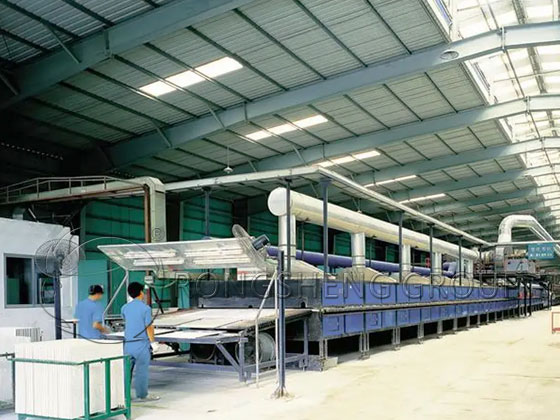
Refractory Materials for the Building and Sanitary Ceramics Industry
The building and sanitary ceramics industry includes building ceramics, sanitary ceramics, and raw and auxiliary materials (glazes, frits, colored glazes, etc.). The refractory materials used in this industry vary widely. Refractory materials used in the building and sanitary ceramics industry include kiln refractories, kiln car refractories, and other refractories.
Kiln Refractories in the Building and Sanitary Ceramics Industry
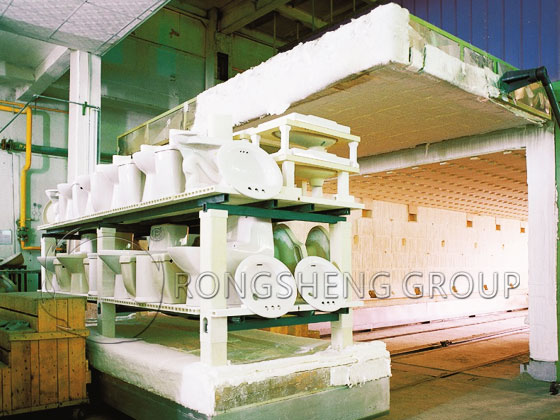
Kiln refractories include the kiln walls and roof, generally consisting of three layers: an inner layer of lightweight insulation cotton, felt, or board; a middle layer of heavy or lightweight insulation bricks; and an outer layer primarily composed of red bricks or low-temperature insulation bricks.
- The lightweight insulation layer of the inner layer has seen rapid development in recent years, primarily using low-temperature mullite fiber, while also incorporating high-temperature mullite fiber, high-alumina mullite fiber, and zirconium-containing mullite fiber, covering various systems with temperatures ranging from 1200℃ to 1600℃. Fiber manufacturing processes include drawing, spinning, and blowing. The inner layer also uses lightweight bricks or slabs made of lightweight mullite, high-alumina materials, etc., primarily hollow spherical bricks made of lightweight alumina and mullite.
- The middle layer’s heavy materials still mainly consist of heavy materials made from low-alumina high-silicon, high-alumina low-silicon, mullite and cordierite, and calcined bauxite and mullite.
- The outer layer’s low-temperature refractory materials are mainly made of bauxite, calcined bauxite, clay, etc., with relatively low aluminum content and poor temperature resistance, but at a lower price.
Refractory Materials for Kiln Cars in the Building and Sanitary Ceramics Industry
Refractory materials for kiln cars include the kiln car surface, kiln car support, firing plates, and saggers. Besides the basic structural materials that make up the kiln car, the remaining materials are collectively referred to as kiln furniture materials. The refractory materials for kiln cars are basically the same as those for the kiln walls. Kiln furniture materials vary depending on the type, including mullite, high-alumina mullite, cordierite, mullite-cordierite, SiC, oxide-bonded silicon carbide, and silicon nitride-bonded silicon carbide.
In addition to the above materials, the ceramic rollers in modern roller kilns are indispensable. Current ceramic rollers are made of alumina, quartz, silicon nitride, silicon-infiltrated silicon carbide, recrystallized silicon carbide, and silicon nitride-bonded silicon carbide. The rollers used in roller kilns for building and sanitary ceramics are mainly high-alumina.
Analysis of the Development Process and Current Status of Various Refractory Materials
Lightweight Refractory Materials
Lightweight refractory materials refer to refractory materials with high porosity, low bulk density, and low thermal conductivity. They are used as insulation materials in industrial kilns and other thermal equipment. Compared with general refractory bricks, they have poorer slag erosion resistance, mechanical strength, and wear resistance, and experience greater volume shrinkage at high temperatures. There are several classification methods:
- ① Classification by bulk density: Bricks with a bulk density of 0.3~1.3 g/cm³ are lightweight bricks. Bricks with a bulk density below 0.3 g/cm³ are ultra-lightweight bricks.
- ② Classification by service temperature: Low-temperature insulation materials are used at temperatures of 600~900℃. Medium-temperature insulation materials are used at temperatures of 900~1200℃. High-temperature insulation materials are used at temperatures above 1200℃.
- ③ Classification by product shape: One type is shaped lightweight refractory bricks, including clay-based, high-alumina, silica-based, and certain pure oxide lightweight bricks. Another type is monolithic lightweight refractory materials, such as lightweight refractory concrete.
Lightweight refractory materials are most widely used in modern ceramic kilns, mainly due to their lightweight, ease of construction, and simple operation. In long kilns such as tunnel kilns, roller kilns, and pusher kilns commonly used in the ceramic industry, which have preheating zones, firing zones, insulation zones, and cooling zones, the rational use of lightweight refractory materials according to the different temperatures of each section is particularly important for energy conservation.
Lightweight refractory materials have developed rapidly in recent years, especially lightweight mullite bricks, high-alumina mullite bricks, mullite fibers, and high-alumina mullite fibers, providing necessary material support for energy conservation in kilns used in building and sanitary ceramics.
Lightweight refractory materials were initially mainly lightweight clay bricks. Due to their limited temperature resistance, they could only be used in kilns with relatively low temperatures. In the late 1990s, the technology of mullite and alumina melt-blown refractory gradually matured, leading to the development of hollow spherical bricks. In recent years, the maturity of refractory foaming technology has led to the development of foamed lightweight refractory materials, which greatly reduces the thermal conductivity of refractory materials, forming heat-insulating lightweight refractory materials. At the beginning of this century, refractory fiber technology developed rapidly. The processes for pressing refractory fibers into boards, felts, and other shaped materials have been gradually improved, and the temperature of refractory fibers has been continuously increased, resulting in the current series of refractory fiber insulation materials.
Heavyweight Refractory Materials
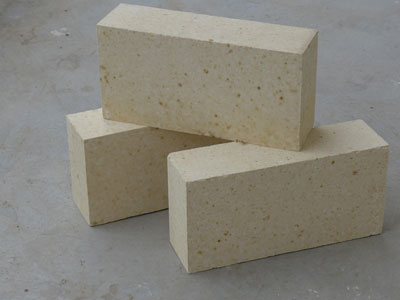
Heavyweight refractory insulating bricks generally fall into the following categories:
- Acidic bricks: Silica bricks (SiO2), refractory clay bricks (SiO2+Al2O3).
- Neutral bricks: High-alumina bricks, chrome bricks (Cr2O3+Al2O3, MgO, FeO).
- Basic bricks: Magnesia bricks, chrome-magnesia bricks, dolomite bricks.
- Special bricks: Spinel bricks, zircon bricks, zirconia bricks, carbon bricks, silicon carbide bricks, and other bricks.
Heavyweight bricks were initially the primary refractory material used in ceramic kilns. However, with the continuous improvement of lightweight insulating refractory materials, heavyweight bricks are no longer widely used in tunnel kilns and track kilns for building and sanitary ceramics, except for special requirements. Heavyweight refractories are still used in corrosion-resistant kilns such as frit kilns, shuttle kilns for pigment production, and rotary kilns. The purpose is to prevent slag shedding and provide good corrosion resistance. Especially in frit kilns, where materials come into direct contact with refractory materials, the selection of heavy refractory materials requires extra caution, particularly regarding their material composition, density, and thermal conductivity. The characteristics of this type of kiln are the opposite of tunnel kilns and track kilns; generally, heavy refractory materials are placed in the inner layer, while heavy refractory materials and insulation materials are placed in the middle and outer layers.
The development of heavy refractory materials has paralleled the development of my country’s metallurgical industry. The first major development began in the 1950s, benefiting from Soviet support for my country’s steel industry. The second major development occurred in the 1990s, with the rapid development of my country’s steel enterprises and other metallurgical advancements leading to the rapid growth of heavy refractory materials. Heavy refractory materials for ceramic kilns are similar to those used in the glass industry, mainly consisting of acidic bricks, neutral bricks, and some special bricks. The selection of bricks is primarily based on the kiln’s firing temperature, atmosphere, and the corrosiveness, acidity, and alkalinity of the molten material.
For high-quality refractory materials for the building and sanitary ceramics industry, please contact Rong Sheng Refractory Factory. Free samples and quotations are available.