To address the problems of low coal utilization and severe environmental pollution, pressurized coal-water slurry gasification, as a crucial technology for the clean and efficient utilization of coal, has experienced rapid development. Hundreds of units, including the Texaco coal-water slurry gasifier, the four-nozzle opposed coal-water slurry gasifier, and the Tsinghua water-cooled wall coal-water slurry gasifier, are already in operation, becoming the mainstream of the modern coal chemical industry. High-chromium bricks, as the lining material for coal-water slurry gasifiers, have also seen rapid development. Initially, when the first Texaco gasifier was introduced, the furnace lining refractory material was also imported, but its high price, accounting for 40% of the equipment cost, and its short service life made the development of high-chromium bricks imperative.
The Development History of High-Chromium Bricks in Coal-Water Slurry Gasifiers
Over a century of development in coal gasification technology, and with the continuous advancement of gasifier processes, the development of refractory materials for coal-water slurry gasifiers has gone through the following stages:
Early, research on refractory materials for gasifiers mainly focused on high-alumina, corundum, and magnesia materials. This was primarily based on the application of refractory materials in other high-temperature industrial kilns.
Subsequent research revealed that the solubility of Cr2O3 in coal slag with a basicity of 0.4-1.0 is minimal below 1700 °C, and its solubility in coal slag is only 1.5 vol%. Therefore, chromium-containing refractory systems gradually became the preferred materials for coal-water slurry gasifiers, including magnesia-chromium and alumina-chromium refractories. For example, the magnesia-chromium spinel bricks developed by Radex in Austria have good resistance to slag erosion, but are prone to cracking during use. The French company SAVOIE developed a Cr2O3-Al2O3-ZrO2-SiO2 material system, but its resistance to slag erosion was poor, resulting in a service life of only 8,000 hours for the cylinder bricks.
Subsequent research revealed that the Cr2O3-Al2O3-ZrO2 material system exhibited optimal resistance to coal slag erosion, and its application in coal-water slurry gasifiers began. With increasingly stringent requirements for erosion resistance and service life, the Cr2O3 content in the Cr2O3-Al2O3-ZrO2 material system has been increased, reaching approximately 90%, further enhancing its resistance to slag erosion. After years of development, Cr2O3-Al2O3 bricks have now evolved into a series of chromium-aluminum-zirconium and high-chromium brick products for use in coal-water slurry gasifiers. The production of chromium-aluminum-zirconium and high-chromium bricks has reached international advanced levels.
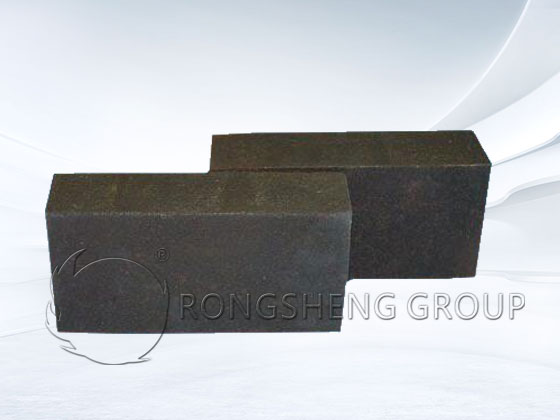
Requirements for High-Chromium Bricks in Coal-Water Slurry Gasification Furnaces
Currently, there are three main processes for coal-water slurry gasification furnaces in China. The first is Texaco’s top-mounted single-nozzle coal-water slurry gasification technology. The second is the top-mounted single-nozzle multi-component slurry gasification technology developed by the Northwest Chemical Research Institute. The third is the side-mounted multi-nozzle opposed gasification technology developed by East China University of Science and Technology and other institutions. All three belong to wet-process fluidized bed pressurized gasification technology.
Due to the complex operating conditions inside the gasifier, the refractory bricks in the working layer operate under high-temperature (1300~1700 ℃) and high-pressure (2~8.5 MPa) conditions for extended periods, enduring erosion from high-temperature molten slag, scouring from gas flow, and significant temperature fluctuations, with some areas directly subjected to flame scouring. Therefore, slag penetration and erosion, thermal stress damage, and erosion from molten slag and high-speed gas flow are the main causes of refractory brick corrosion. Therefore, high-chromium bricks need to address the following issues:
- First: Increase the Cr2O3 content. First, raw material optimization, replacing sintered Cr2O3 with fused Cr2O3, can significantly improve the performance indicators of high-chromium bricks. Additionally, the addition of monoclinic zirconium utilizes its phase transformation toughening properties to improve the thermal shock resistance of high-chromium bricks, thereby extending the kiln’s service life.
- Second, increasing the density of high-chromium bricks and reducing apparent porosity. Current methods mainly involve salt impregnation and surface coatings to reduce surface porosity and prevent slag erosion.
- Third, improving the strength of high-chromium bricks. This is achieved by optimizing particle size distribution, increasing the sintering temperature, and adding novel accelerators and binders to improve product quality.
- Fourth, considering the erosion rate and dominant factors of refractory bricks in different parts of the gasifier.
Differences in damage mechanisms allow for targeted improvements to certain properties of refractory bricks in specific areas, and the adoption of comprehensive furnace lining techniques can extend the overall service life of gasifier refractory materials.
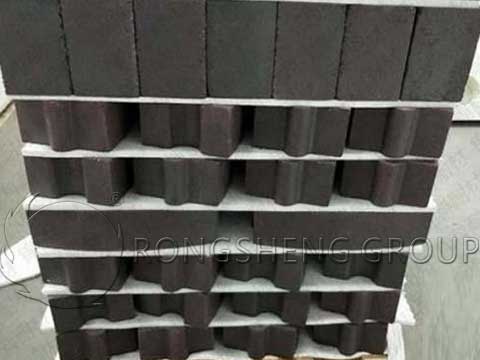
Application of High-Chromium Bricks in Fiberglass Furnaces
To understand fiberglass furnaces, we need to understand what fiberglass is. Fiberglass is a material composed of extremely fine glass filaments. These filaments are formed by rapidly stretching or blowing molten glass, typically with diameters ranging from a few micrometers to over twenty micrometers. It is widely used in defense, aerospace, transportation, energy conservation and environmental protection, wind power generation, electronics and information technology, and many other sectors related to people’s livelihoods.
Before the advent of the 10,000-ton alkali-free tank furnace fiber drawing process, the fiberglass production technology was primarily based on the crucible method. This involved first producing glass spheres, then reheating and melting them in a platinum crucible to draw them into fibers. This outdated process was energy-intensive, costly, and inefficient. Later, through joint research and development between the Nanjing Fiberglass Research Institute and Taishan Fiberglass, the first 10,000-ton alkali-free tank furnace fiber drawing production line in China was built.
Fiberglass furnaces mainly use dense high-chromium bricks and dense zircon bricks. Dense high-chromium bricks are mainly used in the walls, bottom, channel lining, channel walls, feed inlets, corner bricks, and flow holes of fiberglass furnaces, particularly in highly corrosive areas.
Dense zircon bricks are mainly used for bottom lining and secondary lining, wall backing, channel backing, and electrode hole bricks.
Applications of High-Chromium Bricks in Other Furnaces
With the development of modern life, waste disposal has become a major problem urgently needing to be addressed by industry. In China, waste incineration is the primary method. However, the dioxins and heavy metal pollution generated by waste incineration products cause significant environmental pollution. In contrast, European and American countries mainly use fly ash melting furnaces to treat waste. These furnaces process fly ash at high temperatures (>1400℃) to completely vitrify it before cooling it into a solid state, which is then used for landfill or in the production of fiberglass and decorative materials, effectively solving the waste pollution problem. In recent years, the application of fly ash melting furnaces has been developing rapidly, and the designed daily processing capacity is far higher than that in Europe and America. Currently, the key refractory material for fly ash melting furnaces is cast zirconium corundum products. Due to the complex composition of fly ash and its liquid state at the operating temperature of the melting furnace, it severely corrodes existing furnace lining refractory materials. The service life of fused cast zirconium-alumina products used in fly ash melting furnaces is only 3-4 months. Through comparative experiments on fused cast zirconium-alumina bricks, high-chromium bricks, chromium-alumina bricks, high-purity alumina bricks, and dense zircon bricks, fused cast zirconium-alumina bricks, due to their ultra-low porosity and good crystalline phase, exhibit good impermeability and can be used as fly ash furnace linings; however, their erosion resistance needs improvement. Dense zircon bricks, because their zircon phase is easily decomposed by alkaline components, leading to structural spalling, cannot be used as fly ash furnace lining materials. High-purity alumina bricks, due to their poor erosion resistance, are also not ideal lining materials. Cr2O3, however, exhibits excellent erosion resistance, and its resistance to fly ash erosion continuously improves with increasing Cr2O3 content. Therefore, it can be inferred that high-chromium bricks are the ideal lining material for fly ash furnaces. Subsequently, they have also been applied in some plasma fly ash furnaces with excellent results.
Rongsheng Chrome Bricks Manufacturer provides high-quality fused cast zirconium-alumina bricks, high-chromium bricks, chromium-alumina bricks, high-purity alumina bricks, dense zircon bricks, and fused cast zirconium-alumina bricks. When you have a need for a certain type of refractory brick, please contact us to get a free quote and samples.