The flash smelting furnace is a large-scale non-ferrous metallurgical furnace and constitutes one of the most critical pieces of equipment in a smelter. During operation, to fulfill production quotas and achieve favorable technical and economic results, the furnace cannot be shut down arbitrarily; instead, shutdowns for maintenance and inspection must be conducted according to a strict schedule. Consequently, the quality of the furnace lining materials and the quality of the masonry construction are of paramount importance. Based on the experience and practical application gained from several iterations of flash furnace lining design, the selection of refractory materials for flash furnace linings must satisfy the following criteria:
- High Refractoriness Under Load (RUL): The refractory material must possess the property of resisting softening when subjected to high temperatures.
- High Structural Strength at High Temperatures: The refractory material must demonstrate resistance to bending and deformation when subjected to the weight of the furnace masonry, the pressure of the molten bath, and other mechanical vibrations at high temperatures.
- Good Thermal Stability: The refractory material must possess the ability to resist cracking and spalling when subjected to sudden temperature fluctuations within the furnace, which can result in uneven temperature distribution across different parts of the material.
- Strong Slag Resistance: During operation, the refractory material must possess the capability to resist corrosion caused by furnace slag and molten metal.
- Low Apparent Porosity: For the molten bath lining within the smelting furnace, the selected refractory bricks must exhibit a low apparent porosity.
- High-Temperature Volume Expansion and Contraction Parameters: During high-temperature operation, physicochemical changes occur within the refractory bricks, resulting in either volume expansion or contraction of the material. Whether the material expands or contracts, these parameters are essential technical data that must be thoroughly understood during the furnace construction process.
- Tight Dimensional Tolerances: The external dimensions of the refractory bricks must adhere to strict tolerances.
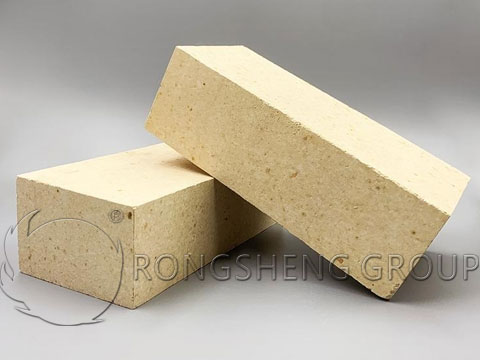
The primary refractory bricks utilized in flash smelting furnaces are magnesia-chrome bricks. Since the 1960s, the purity of raw materials and the firing temperatures used for magnesia-chrome bricks have been progressively increased; consequently, their physical properties have continuously improved, and the variety of available types has steadily expanded. Based on their chemical composition, physical properties, and manufacturing processes, magnesia-chrome bricks can be classified into various categories, including chemically bonded direct-bonded magnesia-chrome bricks, semi-rebonded magnesia-chrome bricks, electro-fused rebonded magnesia-chrome bricks (fused-grain magnesia-chrome bricks), fused-cast magnesia-chrome bricks, unfired magnesia-chrome bricks, pre-reacted magnesia-chrome bricks, and fully synthetic magnesia-chrome bricks. This diversification has led to the increasingly widespread application of magnesia-chrome bricks. Flash smelting furnaces typically utilize the first four types of magnesia-chrome bricks listed above (though fused-cast magnesia-chrome bricks are currently employed less frequently).
Selection of Refractory Materials for Flash Smelting Furnaces
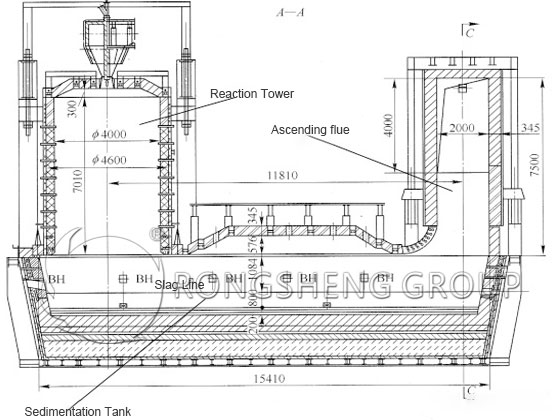
The flash smelting furnace is a large-scale furnace used for the smelting of non-ferrous metals. Its structure primarily consists of three main components: a reaction shaft where the furnace charge undergoes reactions; a settler for storing and separating the copper matte and slag; and an uptake shaft that channels the flue gas into a waste-heat boiler. Due to the unique nature of the reaction processes and structural configuration of the flash smelting furnace, the specific types of refractory materials selected—as well as the associated masonry requirements—vary for each distinct section of the furnace.
Refractory Bricks Lining for Reaction Towers
The reaction tower serves as the critical zone for rapid material reactions; indeed, the primary chemical reactions occurring during the smelting process take place within this tower. Internal temperatures within the tower can reach peak levels of 1400°C to 1500°C. High-temperature furnace charge, undergoing rapid reactions, reaches the settler within a matter of seconds; simultaneously, a portion of the molten material flows down along the inner walls of the reaction tower. This mixture of materials and high-temperature gas streams directly impinges upon the furnace walls; such physical scouring and chemical erosion of the materials directly impact the service life of the refractory bricks. Furthermore, since the reaction tower structure is suspended above the settler—with the refractory bricks installed between two horizontal water jackets—replacement of these bricks is extremely difficult and inconvenient. Consequently, the tower structure itself necessitates the selection of refractory materials possessing exceptional high-temperature resistance, resistance to physical scouring, and strong resistance to chemical erosion—specifically, fused-rebonded magnesia-chrome bricks or electro-cast magnesia-chrome bricks.
The requirements for the refractory lining at the top of the reaction tower are somewhat less stringent, as this section is exposed primarily to radiant heat and operates at lower temperatures. Since the materials do not directly impinge upon this area, the degree of erosion is relatively mild; therefore, various types of semi-rebonded magnesia-chrome bricks or high-grade direct-bonded magnesia-chrome bricks may be selected. Although some modern flash smelting furnaces utilize a single central concentrate burner in conjunction with high-purity oxygen-enriched smelting—a configuration that intensifies the thermal load—enhanced cooling systems at the tower top ensure that the use of extremely expensive, premium-grade magnesia-chrome bricks remains unnecessary; instead, direct-bonded or semi-rebonded magnesia-chrome bricks remain suitable choices.
Refractory Lining Materials for the Settling Hearth
The settling hearth is situated beneath the reaction shaft and the uptake shaft; its primary functions are material storage and melt separation. Consequently, it utilizes a wider variety of refractory materials compared to the reaction shaft and the uptake shaft.
- Inner Surface Lining of the Settling Hearth
The upper space of the settling hearth serves as a channel for the flow of high-temperature gases, with gas temperatures exceeding 1350°C. This zone is not directly exposed to liquid-phase erosion; furthermore, the gas velocity is relatively low, resulting in weak scouring forces. Consequently, the wear on the refractory bricks in this area is less severe than that observed in the slag line zone or the main body of the reaction shaft. Therefore, semi-rebonded magnesia-chrome bricks or premium-grade direct-bonded magnesia-chrome bricks are typically employed for the roof structure of the settling hearth. In actual engineering designs, to extend service life, water-cooled beams are often incorporated into the roof structure to provide cooling. This serves to lower the roof temperature and enhance the resistance of the refractory brick surfaces against chemical corrosion and gas-flow scouring.
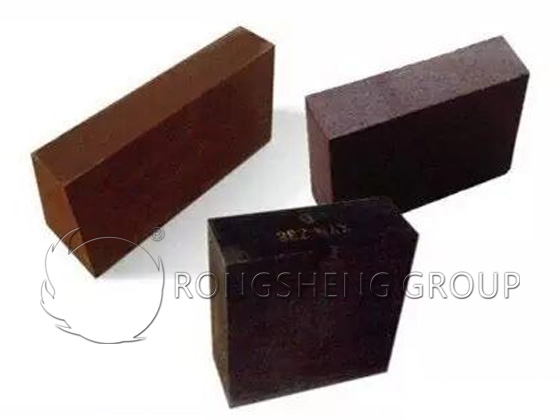
The slag line of the settling hearth constitutes the most susceptible area to erosion within the molten bath, and it is also the zone subject to the most severe wear. The slag produced in a flash smelting furnace is alkaline in nature, composed primarily of oxides of Cu, Fe, S, Pb, and Zn, as well as SiO₂. Specifically, FeO accounts for 35% to 42% of the composition, while SiO₂ accounts for 28% to 34%; these constituents are the primary agents responsible for the severe erosion of the refractory bricks. Although the SiO₂ content and the Fe/SiO₂ ratio are frequently adjusted during flash furnace operations—primarily to reduce the copper content within the slag—the inherent erosive potential of the molten slag against the refractory bricks remains fundamentally unchanged. Another area highly susceptible to erosion comprises the three wall sections of the settling hearth located directly beneath the reaction shaft; these sections are subjected to direct scouring and erosion by the molten bath. This zone represents the area within the flash smelting furnace where temperatures are highest and the risk of erosion is most acute. Consequently, during the design phase of the flash furnace lining, various cooling methods are typically implemented to enhance the erosion resistance of this specific zone. Therefore, it is imperative that these critical areas be lined with high-quality semi-rebonded magnesia-chrome bricks that exhibit superior resistance to both slag attack and mechanical scouring. Furthermore, given that the slag line zone is also subjected to the stresses associated with the frequent tapping of copper matte, the use of electro-fused rebonded magnesia-chrome bricks is considered the most appropriate choice for this specific location.
Compared to the slag line zone and the vertical walls of the molten bath, the furnace bottom experiences a significantly lower degree of mechanical scouring and chemical erosion. However, the performance requirements for the bricks used in this specific section are no less stringent than those for other parts of the furnace. This is because the furnace bottom serves as the foundation for the entire furnace lining. Furthermore, at least one face of the refractory bricks in this area is in direct contact with the molten liquid; given that the melt remains within the hearth for a significant duration, an improper selection of refractory bricks could lead to liquid leakage—a failure mode that is absolutely impermissible. Consequently, the refractory bricks used in the furnace bottom must possess exceptionally high compressive strength, low apparent porosity, and a high load-softening temperature, enabling them to function reliably over extended periods while subjected to both immersion in high-temperature liquids and mechanical compressive loads. For the regions situated below the slag line and within the furnace bottom, the ideal choice is typically a high-compressive-strength semi-rebonded magnesia-chrome brick or an electro-fused rebonded magnesia-chrome brick. High-grade direct-bonded magnesia-chrome bricks may also be utilized, provided that their physicochemical properties fully satisfy the specified requirements.
For the outer layer of the furnace walls—situated external to the magnesia-chrome bricks—the standard practice involves employing either a magnesia-chrome castable embedded with internal copper cooling pipes or a composite structure comprising refractory clay bricks backed by ramming material.
- Lower-to-Middle Layers of the Furnace Hearth
For the bricks used in the lower-to-middle layers of the furnace hearth, in addition to the thermal insulation properties inherent in refractory bricks, compressive strength is a critical parameter. Therefore, when selecting bricks for the hearth, the compressive strength per unit area of the refractory bricks must be carefully considered. Based on our extensive design experience and practical application over many years, for flash smelting furnace hearths operating at smelting temperatures below 1550°C, the compressive strength per unit area must exceed 8.0 MPa. Consequently, the bottommost layer is constructed using refractory clay bricks with a compressive strength greater than 30.0 MPa, and high-temperature insulating bricks with a compressive strength greater than 10.0 MPa.
- Connection Sections
The connection points where the reaction shaft and the uptake flue intersect with the settler are characterized by vertical junctions; these areas are subjected to the most severe scouring effects from the gas flow. The structural design employed here utilizes several cooling copper pipes as a skeletal framework, with the interstitial spaces filled using monolithic refractory castables. At high temperatures, these monolithic refractory castables must exhibit excellent resistance to corrosion and erosion; furthermore, during installation, they must possess superior flowability to ensure high-quality construction. Following placement, a sufficient curing period is mandatory to ensure the material attains its required performance characteristics.
- Uptake Flue
The uptake flue serves as the channel through which the flue gas from the flash smelting furnace converges and is discharged. During the design phase, in order to minimize dust and fume content, the upward velocity of the flue gas at the inlet is typically designed to be relatively slow—generally ranging from 5.0 to 6.6 m/s. As the flue gas flows through the channel, a portion of the dust and fumes will adhere to the surface of the refractory lining; this phenomenon is most pronounced at the sloping roof section and at the flue gas outlet. To mitigate the formation of accretions (buildup) at the flue gas outlet, the gas velocity at this specific location is typically increased. Consequently, the gas velocity at the outlet is generally higher than that at the inlet, ranging from 6.0 to 9.0 m/s. Although the gas flow exerts a certain degree of scouring and erosive force on the refractory bricks, once the adhered material penetrates to a certain depth within the bricks (a condition known as “slag coating”), it can actually serve a protective function for the refractory lining. Nevertheless, any accretions forming at the flue gas outlet must be removed in a timely manner to prevent any obstruction to the normal discharge of the flue gas. The temperature in the rising flue section is lower than that of the reaction tower and settling chamber; during normal operation, it ranges between 1250°C and 1300°C. Consequently, semi-rebonded or direct-bonded magnesia-chrome bricks are typically selected for this area. In the sections adjacent to the settling chamber—particularly above the slag discharge port—temperatures tend to be higher, and the changing direction of the gas flow creates a certain degree of erosive scouring; therefore, semi-rebonded magnesia-chrome bricks are the preferred choice for these specific zones. Currently, in an effort to minimize maintenance requirements for rising flues, some countries have begun installing multi-layered horizontal water-cooled copper jackets along the vertical walls of the flue to extend the service life of the refractory bricks.
Based on the analysis of the three aforementioned sections, it is evident that the selection of refractory bricks must be determined by the specific operating conditions. It is not simply a matter of choosing the highest-grade material available; rather, the critical factor is making the appropriate selection for the given application.
Monolithic Refractories
Monolithic refractories serve as auxiliary materials for furnace construction and can be broadly classified into two categories: ramming mixes and castables. In industrial furnace applications, they are primarily utilized in areas where the use of refractory bricks for masonry is impractical, in sections containing cooling elements, and in the furnace hearth. While monolithic refractories encompass a wide variety of products, those used in flash furnaces can be broadly categorized—based on their chemical composition—into four main types: magnesia-chrome, magnesia, high-alumina, and clay-based.
The flash furnace is a structure of considerable complexity, featuring numerous locations where monolithic refractories are employed; these include the H-beams at the tops of the reaction shaft, the settling chamber, and the uptake shaft, as well as connecting sections, furnace walls, and the furnace hearth. Material selection is determined by the specific location of application. For instance, magnesia-chrome castables are frequently used within H-beams, whereas connecting sections may utilize magnesia-chrome, magnesia, or high-purity alumina castables. For standard furnace walls—depending on the requirements of the brickwork structure—either magnesia-chrome or magnesia castables may be selected; in these specific areas, the castables are required to possess excellent flowability, allowing them to flow into the designated positions with only minimal vibration. In the furnace hearth, a layer of magnesia-chrome ramming mix is typically installed beneath the magnesia-chrome bricks, while clay-based ramming mix is generally used beneath clay refractory bricks. Unlike castables, the ramming mixes used in the furnace hearth do not require flowability; furthermore, specific requirements regarding their moisture content must be strictly observed.
The installation of monolithic refractories is predominantly carried out on-site at the construction site; only a limited number of monolithic refractory products—such as burner blocks and precast beams—are manufactured in a factory setting.
During the installation of monolithic refractories, it is imperative to strictly adhere to the construction procedures specified by the supplier, ensuring that the installation and curing processes are executed in the prescribed sequence.