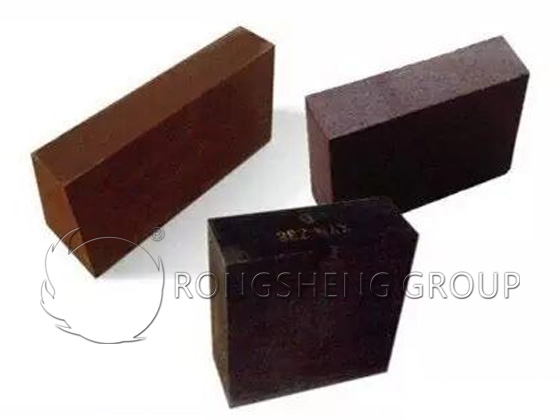
Pollution within the cement industry caused by refractory materials is primarily attributed to chromium-bearing refractories. The main pathways for this contamination are twofold: First, during the calcination of cement clinker, the presence of an oxidizing atmosphere and alkaline oxides—combined with specific temperature conditions—causes a portion of the Cr³⁺ in chromium-bearing refractories to convert into Cr⁶⁺, a form hazardous to human health. This Cr⁶⁺ subsequently mixes into the cement clinker as the refractory lining spalls, resulting in excessive chromium levels in the final cement product. Second, the improper disposal of spent chromium-bearing refractory bricks allows rainwater runoff to leach contaminants into the ground, thereby polluting groundwater sources.
With the expansion of the cement industry, chromium-bearing refractory materials have been extensively deployed in the firing zones of cement kilns, yielding excellent operational results. However, this widespread application has simultaneously led to increasingly pervasive chromium contamination. To address the environmental pollution issues stemming from the use of magnesia-chrome bricks in cement kilns, the transition to chromium-free refractory materials has become an urgent priority. Thanks to the tireless efforts of professionals in the refractory industry, significant strides have been made in the development of chromium-free basic refractories. The primary chromium-free refractory materials currently utilized in the firing zones of cement kilns include magnesia-spinel bricks, magnesia-iron spinel bricks, and magnesia-iron-aluminum composite spinel bricks.
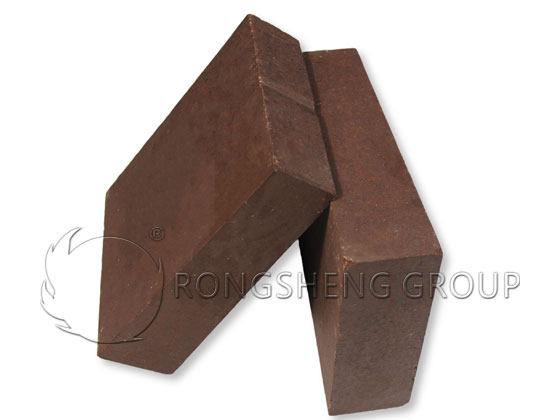
Magnesia-Iron-Aluminum Composite Spinel Bricks
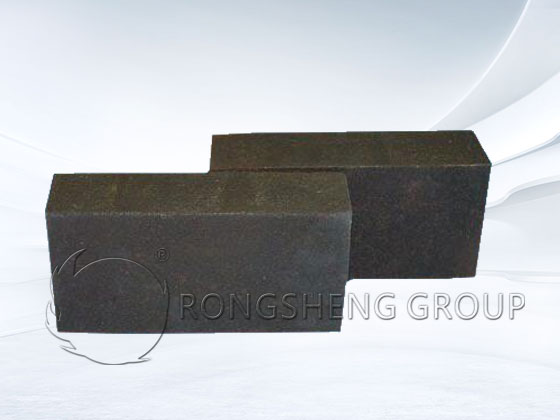
Magnesia-Iron-Aluminum composite spinel bricks represent a new type of energy-efficient and eco-friendly refractory material, developed as an advancement upon the existing magnesia-iron spinel bricks.
Production of Magnesia-Iron-Aluminum Composite Spinel Bricks
Raw Material Standards
Upon arrival at the facility, incoming raw materials undergo an initial chemical composition analysis in the laboratory; their primary chemical constituents must comply with the requirements specified in the following Table.
| Items | MgO | SiO2 | Fe2O3 | Al2O3 | CaO |
| Fused Magnesia | ≥97% | ≤0.8% | ≤0.8% | – | ≤1.0% |
| Sintered Magnesia | ≥97% | ≤1.0% | ≤1.0% | – | ≤1.5% |
| Iron-Aluminum Spinel | ≤1.0% | ≤0.8% | ≥35% | ≥55% | ≤1.0% |
Raw Material Preparation
Raw materials that have passed quality inspection undergo coarse crushing in a jaw crusher. A portion of this material proceeds to a cone crusher for intermediate crushing. Following screening, particles ≤5 mm in size are classified into various size fractions—in accordance with process requirements—and directed into designated storage bins. Particles >5 mm are returned to the cone crusher for further reduction. The remaining portion of the material is fed into a tube mill or Raymond mill to be processed into fine powder (≤0.088 mm) for subsequent use.
Mixing
Using sulfite pulp waste liquor as a binder, the granular materials are first introduced into a wet pan mill and mixed for 3 to 5 minutes. Four-fifths of the binder is then added, followed by another 3 to 5 minutes of mixing. Finally, the fine powder is added, and the mixture is blended for an additional 5 to 10 minutes. During this process, additional binder is added as appropriate, depending on the moisture content of the mix; once the material is uniformly blended, it is discharged for subsequent brick forming.
Forming
The bricks are formed using a 630-ton program-controlled hydraulic press. The resulting semi-finished brick bodies must be free of surface pitting or cracks, exhibit regular dimensions and geometry, and meet all semi-finished product standards. Furthermore, the bulk density of the semi-finished product must be ≥3.12 g/cm³.
Firing
Semi-finished brick bodies that have passed inspection are loaded into a tunnel dryer, where they undergo a drying cycle at 110°C for 24 hours. Upon passing a post-drying inspection, the bricks are loaded onto kiln cars and transported into a high-temperature tunnel kiln for firing under a weakly reducing atmosphere. After exiting the kiln, the finished bricks undergo final sorting and are subsequently moved into storage.
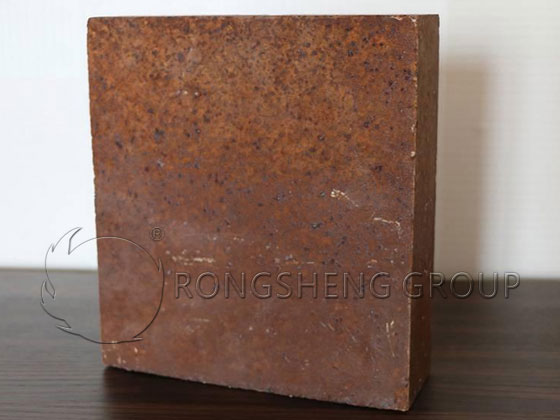
Physicochemical Properties of Magnesia-Iron-Aluminum Composite Spinel Bricks
| Physicochemical Properties of Magnesia-Iron-Alumina Composite Spinel Bricks | |
| MgO, % | ≥86 |
| Fe2O3, % | 5-8 |
| Al2O3, % | 3-5 |
| Apparent Porosity, % | ≤16 |
| Bulk Density, g/cm3 | ≥2.98 |
| Compressive Strength at Normal Temperature, MPa | ≥65 |
| 0.2 MPa Load Softening Start Temperature, ℃ | ≥1700 |
| Thermal Shock Resistance /times, 1100℃, Water Cooling | ≥10 |
| Thermal Conductivity, 1000℃, W/(m·K) | ≤2.60 |
Properties of Magnesia-Ferro-Alumina Composite Spinel Bricks
Excellent Erosion Resistance
First, magnesia-ferro-alumina composite spinel bricks possess high purity and contain minimal low-melting-point phases. The contact area between the main crystalline phases—including periclase, magnesia-alumina spinel, magnesia-ferrite spinel, and ferro-alumina spinel—is substantial, resulting in a high degree of direct bonding. The low-melting-point phases are distributed within the triangular interstitial regions formed between the crystals, thereby endowing the material with superior resistance to erosion.
Second, during the high-temperature processes of firing and service, a series of reactions occur between the MgO component and the Al₂O₃, Fe₂O₃, or FeO components of the ferro-alumina spinel, leading to the formation of secondary spinel phases. These reactions are accompanied by a certain degree of volume expansion, which enhances the material’s density and effectively inhibits the infiltration of low-melting-point phases from the cement. Simultaneously, the constituents within the brick react with the infiltrating cement components to generate high-melting-point phases; this increases the viscosity of the low-melting-point phases and retards their infiltration process. Consequently, magnesia-ferro-alumina composite spinel bricks exhibit excellent resistance to erosion.
Excellent Kiln Coating Adhesion
Cement clinker is produced using limestone, clay, and iron-bearing raw materials as primary ingredients, formulated into a raw mix according to specific proportions. At high temperatures, the cement raw mix generates a molten phase which reacts with the surface of the refractory bricks and infiltrates the brick interior through its pores. The infiltrated substances solidify within the brick at temperatures below 1200°C, forming an initial kiln coating that acts as a “mechanical anchor.” This initial coating subsequently bonds with the clinker particles, causing the kiln coating to gradually thicken. The primary constituents of the kiln coating are silicates, aluminates, and ferro-aluminates. Magnesia-ferro-alumina composite spinel bricks contain specific proportions of Al₂O₃, Fe₂O₃, or FeO, and possess an appropriate A/F ratio; these characteristics facilitate the formation of a stable kiln coating, thereby providing a self-protective function for the brick.
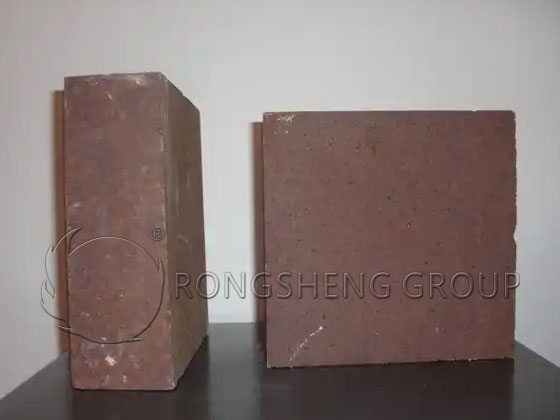
Excellent Thermal Shock Resistance
Ferro-alumina spinel is characterized by a low coefficient of thermal expansion and high thermal conductivity; these properties significantly reduce the thermal stress experienced by magnesia-ferro-alumina composite spinel bricks. Magnesia-iron-aluminum composite spinel bricks comprise various mineral phases—including periclase, iron-aluminum spinel, magnesia-iron spinel, and magnesia-aluminum spinel. Due to the differing coefficients of thermal expansion among these various phases, a multitude of microcracks form within the material structure, thereby enhancing the material’s toughness. Consequently, magnesia-iron-aluminum spinel bricks exhibit superior flexibility and thermal shock resistance.
Low Thermal Conductivity
The refractory lining bricks in cement kilns typically feature a single-layer structure. Prolonged operation of the kiln body at high temperatures can easily lead to shell deformation, which disrupts kiln operations and reduces cement output; therefore, it is essential to minimize the thermal conductivity of the kiln lining as much as possible. In contrast to direct-bonded magnesia-chrome bricks, magnesia-iron-aluminum composite spinel bricks are multiphase composite materials characterized by lower thermal conductivity. This property helps reduce the surface temperature of the kiln shell and minimizes heat loss, thereby lowering fuel consumption and creating favorable conditions for improving both the operational efficiency and service life of the cement kiln.
A comparative analysis of the physicochemical properties of various chrome-free basic bricks versus direct-bonded magnesia-chrome bricks reveals the following: Although magnesia-aluminum spinel bricks possess excellent thermal shock resistance, they exhibit poor clinker coating adhesion and suffer from excessively high thermal conductivity. Magnesia-iron spinel bricks, while demonstrating excellent overall performance, contain chromium components and are therefore classified as prohibited products. Magnesia-iron-aluminum composite spinel bricks, by virtue of their superior comprehensive high-temperature performance, currently stand as the preferred refractory material for use in the burning zone of cement kilns.
Applications of Magnesia-Iron-Aluminum Composite Spinel Bricks
Magnesia-iron-aluminum composite spinel bricks have been widely adopted in nearly one hundred cement kilns, both domestically and internationally. Based on over three years of application data from various cement enterprises, these bricks demonstrate excellent high-temperature performance and strong adaptability. They surpass the performance levels of the directly bonded magnesia-chrome bricks previously used, thereby fully enabling the realization of chrome-free refractory linings in the burning zones of cement kilns.
Rongsheng Magnesia-Iron-Aluminum Composite Spinel Bricks
Magnesia-iron-aluminum composite spinel bricks possess superior comprehensive high-temperature properties—including resistance to corrosion, thermal shock, and abrasion—as well as low thermal conductivity and the ability to facilitate the formation of a stable kiln coating. Consequently, they represent an ideal choice among currently available chrome-free refractory materials for use in the burning zones of cement kilns. Application data gathered over several years from numerous cement enterprises indicates that these bricks ensure stable kiln operation and exhibit strong adaptability; they outperform the directly bonded magnesia-chrome bricks previously employed, thereby fully achieving the objective of chrome-free refractory linings in the burning zones of cement kilns.