The general composition of acid-resistant refractory castables is as follows: 60%-70% acid-resistant refractory aggregate, 30%-40% powder, and 13%-16% water glass solution with a density of 1.38-1.42 g/cm3. When sodium fluorosilicate is used as a hardening accelerator, its addition amount is 10%-12% of the mass of the water glass solution.
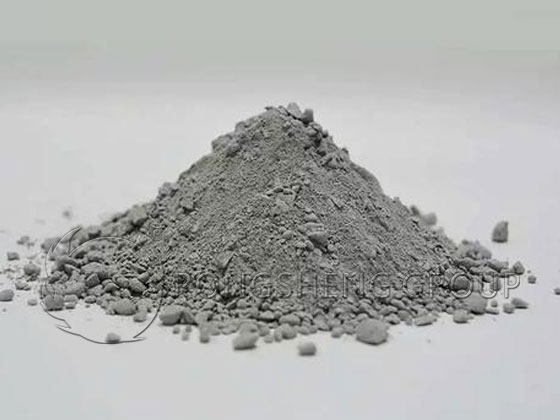
Acid-Resistant Refractory Castable Preparation
The aggregates used in preparing acid-resistant refractory castables mainly include silica, cast stone, gypsum, andesite, diabase, etc. The acid resistance (by weight, %) of several commonly used raw materials is as follows: cast stone 98%, silica >97%, clay clinker 92%~97%, gypsum 92~96%, and andesite >94%. The choice of raw material depends on the application conditions. However, when using silica, it is important to note that quartz undergoes a polycrystalline transformation upon heating, resulting in volume change (expansion). Therefore, waste silica bricks can be used to replace some of the silica raw materials as aggregates. The powders used in preparing this castable mainly include silica powder, cast stone powder, porcelain powder, and high-silica clay clinker powder, among which cast stone powder is the most commonly used acid-resistant powder.
The binder, water glass with a higher M value, should be used to reduce the amount of Na2O introduced by the water glass and improve acid resistance. Water glass solutions with a modulus of 2.6-3.2 and a density of 1.38-142 g/cm³ are generally used. Many compounds can be used as water glass settling accelerators, including fluorine-containing compounds (such as alkali metal salts of fluorosilicic acid, fluoroboric acid, and fluorotitanic acid), esters, acids (such as ethyl acetate), metal oxides (such as oxides of lead, zirconia, and barium), and carbon dioxide (CO₂). However, sodium fluorosilicate (Na₂SiF₆) is widely used due to its ease of use and controllable setting and hardening time.
Acid-resistant refractory castables are mainly used for lining corrosion-resistant flues and chimneys, acid storage tanks, pickling tanks, nitric acid concentration towers, acid recovery furnaces, and other containers subjected to corrosion by acidic high-temperature gases.
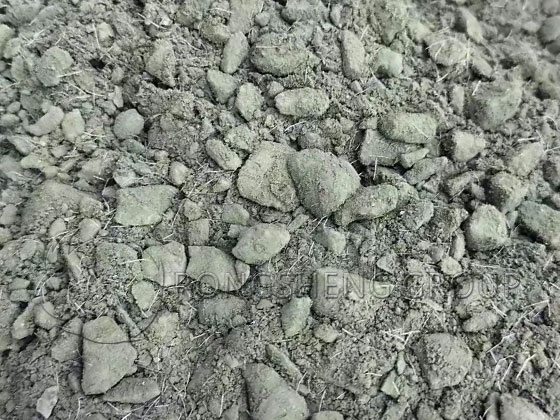
Common Methods for Configuring Acid-Resistant Refractory Castables
In highly corrosive industries such as chemical, metallurgical, and environmental protection, acid-resistant refractory castables serve as critical lining materials, their performance directly impacting equipment lifespan and production safety. This article, starting from materials science principles and combining engineering practice, systematically elucidates the configuration techniques for acid-resistant refractory castables, providing professionals with a technical guide that is both professional and practical.
Material System Construction: Balancing Acid Resistance and Refractoriness
The core challenge of acid-resistant refractory castables lies in simultaneously resisting the erosion of acidic media and the destructive effects of high-temperature environments. The material system must meet three basic requirements:
Main Component Selection: A SiO₂-Al₂O₃ system serves as the framework, with silica fume (containing ≥92% SiO₂) providing a dense network structure, and bauxite clinker (75%-85% Al₂O₃ content) enhancing high-temperature stability.
Acid-resistant additives: Phosphates (such as Al(H₂PO₄)₃) or silica sol (SiO₂·nH₂O) are introduced as binders to form a dense Si-O-P or Si-O-Si protective film on the material surface, blocking the H+ penetration pathway.
Aggregate gradation optimization: A three-stage proportioning method is adopted, namely, coarse aggregate (5-3mm) 40%-50%, medium aggregate (3-1mm) 30%-35%, and fine powder (≤0.088mm) 15%-20%. The D50 value is verified to be in the 8-12μm range using a laser particle size analyzer, ensuring a bulk density ≥2.65g/cm³.
Formulation design: Technology transfer from laboratory to industrialization
Typical formulation design should follow the “3+2+1” principle:
- Three types of basic raw materials: refractory aggregate (60-70%), refractory powder (15-20%), and binder (8-12%).
- Class 2 functional additives: Plasticizers (such as methylcellulose, 0.2-0.5%) improve workability; explosion-proof agents (such as organic fibers, 0.1-0.3%) control baking cracks.
- Class 1 acid-resistant components: Selected according to the characteristics of the medium. For example, in sulfuric acid environments, the ZrO₂ content needs to be increased to 8%-10%, while in hydrochloric acid environments, SiC (6%-8%) is preferred.
Preparation Process: Full-Process Control from Mixing to Curing
Premixing Stage: Using a forced mixer, dry mix aggregates and powders for 3-5 minutes to ensure uniform distribution of SiO₂ and Al₂O₃.
Binder Addition: Add aluminum phosphate solution in three portions, with a 1-minute interval between each addition, to avoid localized gelation.
Vacuum Treatment: Degas for 5 minutes under a -0.095MPa vacuum to eliminate micropores.
Molding Process: Vibration casting is recommended, with a vibration frequency controlled at 2800-3200 times/minute, and the duration determined by surface slurry formation.
Curing Regimen: Employ a three-stage curing method: 25℃ moist curing for 24 hours → drying at 110℃ for 12 hours → heat treatment at 600℃ for 4 hours to ensure complete conversion of the phosphate-bound phase.
Performance Optimization: From Laboratory Testing to Field Verification
Key Performance Indicators:
- Acid Resistance (GB/T 17601-2008): ≥98.5%
- Apparent Porosity: ≤18%
- Flexural Strength at 110℃: ≥8MPa
- Strength Retention after 1000℃×3h Heat Treatment: ≥85%
Failure Mode Control:
- Corrosion Cracking: H+ penetration is inhibited by adding TiO₂ (2-3%) to form a Ti-Si-O protective layer.
- Structural Exfoliation: A three-dimensional network structure is constructed in the matrix using fiber reinforcement technology to improve fracture resistance.
Technological Development Trends
Nano-modification Technology: Introducing nano-SiO₂ (particle size 20-50nm) via the sol-gel method increases room temperature strength by 40% and achieves a drying strength exceeding 12MPa at 110℃.
No-Baking Technology: Developing a calcium aluminate cement-phosphate composite bonding system achieves a demolding strength ≥5MPa after 24 hours of natural curing, shortening the construction cycle by 60%.
3D Printing Adaptability: Optimizing particle size distribution and rheological properties ensures the castable meets printing requirements of extrusion pressure ≤0.3MPa and open time ≥60min.
The formulation of acid-resistant refractory castables represents a deep integration of materials science and engineering practice. Through precise material selection, scientific formulation design, and strict process control, high-performance products meeting the needs of complex working conditions can be prepared. With the integration of cutting-edge technologies such as nanotechnology and 3D printing, this field is rapidly evolving towards intelligence and functionality, providing more reliable protective barriers for industrial equipment.