With the development of refractory material research and development technology, various new types of refractory castables have been widely used in industrial furnaces, such as refractory clay castables and low-cement castables. These materials extend the service life of various industrial furnaces. Among them, phosphate castables are used in heating furnaces and soaking furnaces for heating metals, and can also be used in coking furnaces, etc. Rongsheng phosphate castables have been applied in the forging furnace and rolling annealing furnace of a company’s hot working branch, yielding some practical application experience.
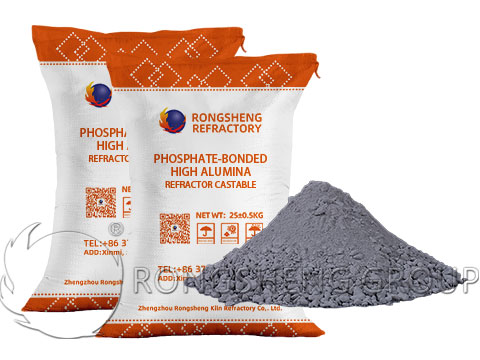
Characteristics of Phosphate Refractory Castables
Phosphate refractory castables are phosphoric acid-bonded castables, belonging to the acidic matrix, with a service temperature of 1400-1600℃. The phosphoric acid binder concentration in phosphate castables is 40%~60%, with an addition amount of 10%-14%. Aluminate cement is commonly used as a setting accelerator, with a dosage of 0.5%~3.0%. A certain proportion of fine magnesium oxide powder is also added.
At room temperature, phosphate refractory castables do not react with aluminosilicate materials except for iron. During construction, heating is required to dehydrate and condense the binder, adhering and cementing the aggregate powder together to achieve room temperature strength. When fine magnesium oxide powder is added, it reacts with phosphoric acid, causing the refractory castable to set and harden. When aluminate cement is added, it forms hydrated mono- or di-hydrogen phosphate. The physicochemical changes of phosphoric acid and phosphate refractory castables during heating are very complex. It reacts with refractory powder or additives to form phosphates, which are further dehydrated into metaphosphoric acid or metaphosphate. With continued temperature increases, polymerization, polycondensation, and primary cementation adhesion occur, forming a ceramic bond that gives the refractory castable better high-temperature performance.
Phosphate refractory castables use clay clinker or bauxite aggregate clinker as refractory aggregate and powder, with dosages of 65%-74% and 24%-35%, respectively. A common mix design is as follows: refractory aggregate with a particle size less than 15mm, with a particle size distribution of 15- 5 mm 50%, 5- 2.5 mm 24%, and less than 2.5mm 26%. Refractory powder fineness is greater than 80% (less than 0.09mm). The accelerator is CA-50 high-alumina cement, the dosage of which depends on construction conditions and room temperature strength requirements. The general dosage is around 2%. When the ambient temperature is low, the dosage should be increased appropriately. If room temperature strength is not required, CA-50 cement can be added, or less can be added.
Process Characteristics of Phosphate Castable Refractories
Phosphate castable refractory is formulated using clay clinker or bauxite clinker as aggregate, industrial phosphoric acid as a binder, and high-alumina cement as an accelerator. It features high strength, high refractoriness, and high thermal shock stability. Design requirements can be achieved by adjusting the Al₂O₃ content of its raw materials. Its operating temperature range is 1450-1600℃, making it one of the castable refractory types with relatively high operating temperatures.
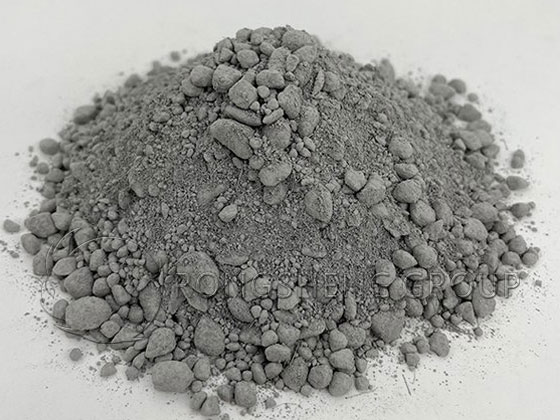
Proportioning of Phosphate Castable Refractories
The proportioning of materials must be appropriate, especially the performance of admixtures. Phosphate should conform to the requirements of GB2091-80 Phosphate. Commercially available industrial phosphoric acid concentrations are typically 80%~85%, but it usually needs to be diluted to 40%~42.5% for on-site use. When diluting, concentrated phosphoric acid should be slowly poured into water while stirring continuously. It is strictly forbidden to pour water into phosphoric acid to prevent acid splashing and injury. The high-alumina cement used as an accelerator should be graded 425# and comply with the requirements of GB201-81 for high-alumina cement.
Phosphate Castable Refractories Preparation and Mixing Process
During industrial furnace maintenance, depending on the workload, manual or mechanical mixing methods can be used, but the overall process requirements remain the same. First, thoroughly mix the refractory raw materials. Then, add 50%–60% of the required amount of phosphoric acid to the mixed dry materials for the first mixing, but do not add the accelerator. After mixing, allow the material to settle; the settling time varies from 24 to 48 hours depending on the season. Before casting, the settled material should be mixed a second time. At this time, add the high-alumina cement accelerator, mix thoroughly, then add the remaining phosphoric acid and continue mixing for 3–4 minutes.
Construction of Phosphate Castables
Formwork is required for the construction of any castable. Depending on the location within the industrial furnace, formwork is typically used for flat surfaces or curved arched surfaces. Based on the material, it can be steel or wood. The formwork must be dimensionally accurate and firmly supported to prevent displacement during the vibratory compaction of the castable. A layer of kraft paper or plastic sheeting should be laid on the side of the formwork in contact with the castable to remove surface roughness during demolding.
During casting, an immersion vibrator is usually used. Vibration continues until the surface of the castable becomes slurry. Excessive vibration can cause internal delamination, reducing the castable’s strength. Insufficient vibration will result in a loose internal structure.
Curing and Baking Characteristics of Phosphate Castables
Phosphate castables easily absorb moisture and deliquesce in humid environments, reducing their compressive strength. Therefore, they should be cured in a dry environment. The optimal curing temperature is 20-50℃. If the ambient temperature is low, low-temperature baking is necessary.
Phosphate castables contain a certain amount of water during formulation and require multiple dehydration processes at different temperatures to induce crystal transformation and polymerization. Therefore, baking is essential before use in the furnace lining, ensuring the castable lining reaches a certain sintering strength. Improper baking can damage the castable lining, causing cracks and spalling. A scientific baking curve should be developed based on the size and thickness of the castable application area. For kilns where the entire lining is constructed with phosphate castable, the baking time is typically 7–10 days, with holding periods at 150, 350, and 650℃, followed by continuous heating for the remaining time. For smaller application areas, baking to above 350℃ is sufficient. At this temperature, most of the free and crystalline water in the castable will be removed, and then baking can proceed according to the specific conditions for refractory brick lining baking.
Years of use have shown that:
(1) Phosphate castables possess strong resistance to spalling, airflow erosion, and abrasion, resulting in a longer service life than ordinary refractory bricks in certain critical parts of industrial furnaces.
(2) In complex structural parts of industrial furnaces, using phosphate castables instead of refractory bricks eliminates the need for tedious brick grinding and cutting, offering advantages such as simple and convenient construction and time savings. It also overcomes the health hazards of harmful dust generated during refractory brick processing, preventing and reducing the incidence of occupational diseases among furnace builders.
(3) The physicochemical properties of the raw materials used to prepare phosphate castables must meet standard requirements, and the amounts of binders and accelerators added must be strictly controlled. Sufficient settling time after the first mixing is also crucial. Only by meeting these requirements can qualified phosphate castables be produced.