At the front kiln mouth of a rotary kiln, the temperature of the discharged clinker reaches approximately 1100°C, while the temperature of the tertiary air entering the kiln fluctuates frequently in response to changing kiln conditions. As the scale of cement plants expands—leading to larger kiln diameters and higher kiln rotation speeds—the corresponding volume of clinker passing through the kiln mouth also increases, thereby intensifying the thermal and mechanical stresses exerted on the refractory castables at this location. The typical service life of refractory castables in the front kiln mouth zone ranges from 4 to 8 months. Common issues encountered include spalling, block detachment, and poor resistance to alkali corrosion. Research has demonstrated that by utilizing raw materials such as M60 mullite, andalusite, Secar 71 cement, active alumina powder, silica fume, α-Al2O3 powder, solid sodium silicate powder, and Guangxi white clay, a refractory gunning mix specifically designed for cement rotary kiln mouths can be formulated. This material effectively mitigates damage to the kiln mouth refractories and extends their service life.
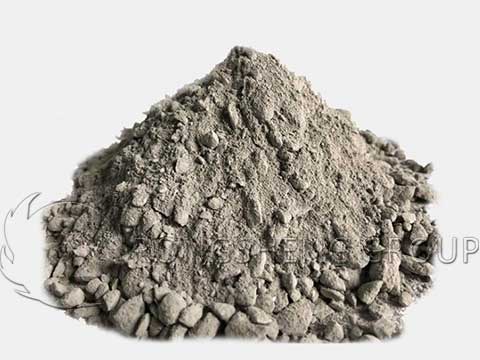
The Effect of Andalusite Addition on the Properties of Low-Cement Refractory Castables
High-alumina low-cement self-flowing castables are widely utilized by numerous refractory manufacturers both domestically and internationally. However, these materials exhibit significant shrinkage after high-temperature treatment—a phenomenon particularly pronounced when they are applied as permanent linings in tundishes. The prolonged service life of tundish permanent linings often leads to severe cracking during the intermediate and later stages of operation. Since the permanent lining also serves as a safety lining, it is crucial to control and mitigate the shrinkage of refractory products under sustained high-temperature conditions. By incorporating a specific amount of andalusite into the batch composition—leveraging andalusite’s high-temperature volume stability and phase transformation principles—the aforementioned issues in refractory materials can be eliminated, thereby enhancing their refractoriness under load and creep resistance.
Andalusite particles of different grain sizes play distinct roles in improving material properties. Coarse-grained andalusite enhances the material’s high-temperature strength, while fine-grained andalusite improves its thermal shock resistance. Both contributions are instrumental in resolving the cracking issues encountered in tundish permanent linings during their operational lifespan.
Drawing upon previous research, the original formulation’s three grain-size fractions of super-grade high-alumina bauxite clinker—specifically 3–1 mm, 1–0 mm, and 200 mesh—were entirely replaced by corresponding grain-size fractions of andalusite. Through a comprehensive investigation of the various physical properties of castables containing different addition levels of these three andalusite grain sizes, the optimal addition level for each specific grain size was determined.
- (1) As the addition level of 3–1 mm andalusite particles increased, the flexural strength of the specimens—following high-temperature treatment—exhibited a trend of initially rising before subsequently declining; furthermore, thermal shock resistance reached its peak performance at an addition level of 10%. As the addition level of 1–0 mm andalusite particles increased, the flexural strength of the specimens—following high-temperature treatment—also followed a trend of initial increase followed by decline, while thermal shock resistance demonstrated a trend of gradual improvement. As the addition level of fine andalusite powder increased, the trend in flexural strength variation following high-temperature treatment became more gradual, and thermal shock resistance likewise exhibited a trend of gradual enhancement.
- (2) After comprehensively considering all relevant factors, the optimal addition level was determined to be 10% for 3–1 mm andalusite particles, 19% for 1–0 mm andalusite particles, and 22% for the fine andalusite powder.
Properties of Andalusite-Based Castables
Andalusite possesses excellent chemical stability, volume stability, slag resistance, high-temperature creep resistance, thermal shock resistance, and high-temperature strength; consequently, it is widely utilized as a premium refractory raw material. Currently, andalusite-based refractory materials are effectively employed in torpedo ladles, induction furnaces, blast furnaces, steel ladles, lime kilns, glass kilns, cement kilns, heat treatment furnaces, anode baking furnaces, electric furnace roofs, kiln cars, and other kiln furniture.
Properties of Andalusite Refractory Castables: Using andalusite, bauxite clinker, and flint clay as primary raw materials, four types of castables were prepared: pure andalusite, andalusite-high-alumina bauxite, andalusite-flint clay, and high-alumina bauxite. The room-temperature properties, linear change upon heating, high-temperature flexural strength, creep resistance, thermal shock resistance, and thermal conductivity of these four castables were compared. A comparative analysis of the properties of the four materials—andalusite castable, andalusite-high-alumina bauxite castable, andalusite-flint clay castable, and high-alumina bauxite castable—yielded the following results:
- (1) The pure andalusite castable and the andalusite-containing castables exhibit excellent creep resistance, indicating their superior resistance to deformation at high temperatures.
- (2) The pure andalusite castable and the andalusite-flint clay castable demonstrate high flexural strength at elevated temperatures; the andalusite-bauxite castable ranks second, while the high-alumina bauxite castable exhibits comparatively poorer high-temperature strength properties.
- (3) The thermal shock resistance of the pure andalusite castable, the andalusite-flint clay castable, and the andalusite-high-alumina castable is superior to that of the high-alumina bauxite castable.
The results indicate that, when compared to high-alumina bauxite castables, both the andalusite-bauxite castable and the andalusite-flint clay castable demonstrate superior high-temperature performance, making them suitable candidates for use as a novel castable material for the permanent lining of tundishes. Given the relatively high market price of andalusite, both andalusite-high-alumina bauxite castables and andalusite-chamotte castables—formulated using andalusite in combination with high-alumina bauxite and chamotte, respectively—are suitable for use as the permanent lining of tundishes.