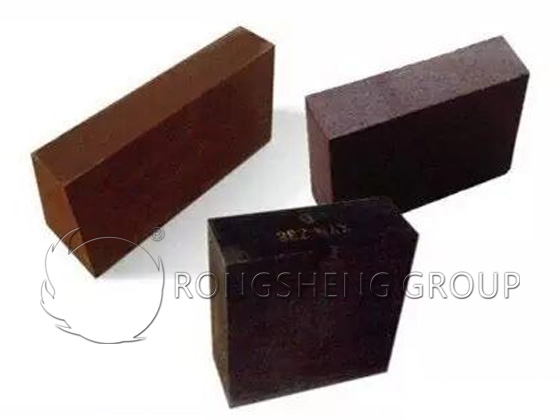
In recent years, with the improvement of clean steel quality and the strengthening of energy conservation and emission reduction requirements, magnesia-carbon refractories have been developing towards low-carbonization. After the carbon content is reduced, the thermal shock resistance and slag erosion resistance of magnesia-carbon refractories are significantly reduced. This is because:
- 1) Lower carbon content reduces the thermal conductivity of the material, decreasing its ability to mitigate thermal stress generated by sudden temperature changes, thus reducing the thermal shock resistance of low-carbon magnesia-carbon refractories.
- 2) Lower carbon content increases the wettability of the slag with the material, thus reducing the resistance to slag erosion and penetration of low-carbon magnesia-carbon refractories.
Therefore, the form of carbon source introduction is crucial in maintaining the excellent mechanical, thermal, and oxidation resistance of magnesia-carbon refractories while reducing carbon content. When a composite carbon source is introduced, ultrafine flake graphite and expanded graphite can fill the pores of the magnesia-carbon material well, resulting in a uniform and dense structure after carbonization and good performance at room temperature. Using mixed graphite of different particle sizes as a carbon source can effectively improve the physical properties of low-carbon magnesia-carbon materials.
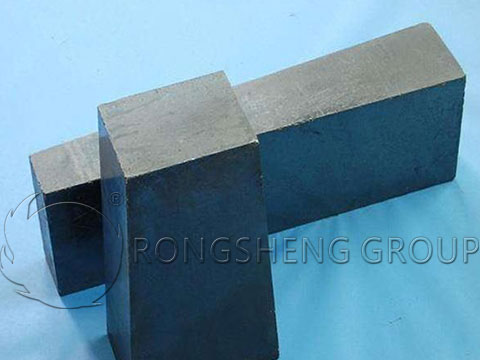
Influence of Different Carbon Sources on the Performance of Low-Carbon Magnesia-Carbon Bricks
An experiment analyzed the influence of different carbon sources on the performance of low-carbon magnesia-carbon bricks.
The experimental magnesia carbon bricks composition used were: 95 fused magnesia (5~3, 3~1, ≤1mm), 96 fused magnesia (≤0.074mm), 195 flake graphite (≤0.044mm, w(fixed carbon)=95.0%, w(volatile matter)=1.2%, sieve residue≤20.0%, w(moisture)≤0.5%), N220 nano carbon black (particle size 20~25nm), Si powder (≤0.044mm), and high-temperature asphalt (softening point>110℃, w(fixed carbon)=59.4%). Thermosetting liquid phenolic resin.
Then, the materials were batched and sample blocks were made to determine the material properties. The following conclusions were drawn from the experiment:
- (1) The low-carbon magnesia-carbon brick with added asphalt had the highest strength, but its oxidation resistance was the worst.
- (2) Low-carbon magnesia-carbon bricks with added carbon black have the lowest high-temperature flexural strength, and their oxidation resistance is between that of low-carbon magnesia-carbon bricks with added graphite and those with added bitumen.
- (3) Low-carbon magnesia-carbon bricks with added graphite have the best oxidation resistance and good mechanical properties at both room temperature and high temperature.
Application of Magnesia-Carbon Bricks in the Iron and Steel Metallurgy Industry
Magnesia-carbon bricks (MgO-C bricks) are mainly used in refining ladle furnaces and ladles, primarily in areas such as the clearance and slag line. Depending on operating conditions, the refractory materials used in these areas must be resistant to high temperatures, thermal shock, and mechanical corrosion caused by molten slag erosion.
During the preheating process, magnesia-carbon bricks in new ladles are severely damaged, resulting in a loose decarburized layer that can reach 30-60 mm in thickness. This layer is washed away during the pouring of molten steel, carrying magnesia particles into the molten slag. Clearly, preventing the carbon in the magnesia-carbon bricks from burning off during preheating is a crucial step in extending the service life of magnesia-carbon bricks in the ladle clearance and slag line areas. Technical measures, besides incorporating composite antioxidants into the magnesia-carbon bricks, include, crucially, covering the surface of the magnesia-carbon bricks with an alkaline, low-melting-point glassy phase liquid after lining to protect the carbon in the magnesia-carbon bricks from burning off during the ladle preheating process.
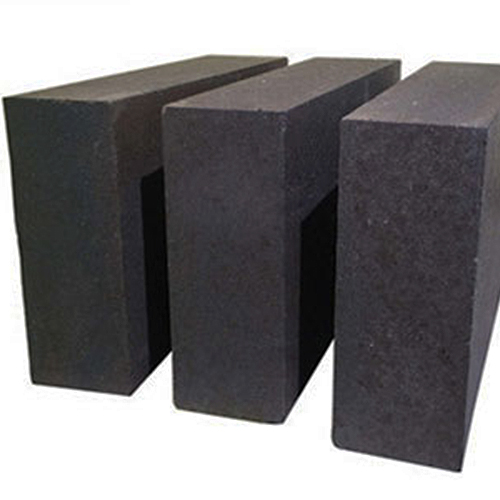
Application of Magnesia-Carbon Bricks in Converter Linings
The operating conditions vary across different parts of the converter working lining, resulting in varying performance of magnesia-carbon bricks.
The furnace mouth area is constantly impacted by both cold and hot molten steel. Therefore, the refractory material used at the furnace mouth must withstand the erosion of high-temperature slag and exhaust gases, be resistant to steel buildup, and be easy to clean.
- The furnace cap area is subjected to severe slag erosion, rapid temperature changes, and the combined effects of high-temperature gas flow due to carbon oxidation and the erosion from dust and high-temperature exhaust gases. Therefore, magnesia-carbon bricks with strong slag erosion resistance and spalling resistance are used.
- On the charging side, magnesia-carbon bricks must possess not only high slag erosion resistance but also high high-temperature strength and excellent spalling resistance. Therefore, high-strength magnesia-carbon bricks with added metal antioxidants are typically used.
- The slag line is the junction of the furnace lining refractory material, high-temperature molten slag, and furnace gas, and is the part most severely affected by slag erosion. Therefore, it is necessary to build magnesia-carbon bricks with excellent slag erosion resistance in the slag line area. Magnesia-carbon bricks with high carbon content are required in the slag line area.
The Use of Magnesia-Carbon Bricks in Electric Arc Furnaces
Currently, almost all electric arc furnace walls are constructed using magnesia-carbon bricks; therefore, the lifespan of these bricks determines the overall lifespan of the electric arc furnace. The main factors determining the quality of magnesia-carbon bricks for electric arc furnaces include the purity of the magnesia source (MgO), the types of impurities, the grain bonding state of the periclase, and the grain size. The purity, crystallinity, and flake size of the flake graphite, the carbon introduction source, are also important factors. Thermosetting phenolic resin is typically used as a binder, with the main influencing factors being the amount added and the residual carbon content. It has been proven that adding antioxidants to magnesia-carbon bricks can alter and improve their matrix structure. However, under normal operating conditions, antioxidants are not a necessary component of magnesia-carbon bricks. Only in electric arc furnaces with high FeOn slag, such as those using direct reduced iron, areas with irregular oxidation, and hot spots, can the addition of various metallic antioxidants become an important part of the magnesia-carbon brick structure.
A steel plant’s electric arc furnace has achieved initial success by using medium- and low-grade magnesia-carbon bricks at the tapping spout and on both sides of the copper tapping spout, replacing the previously used sintered magnesia bricks. The furnace lifespan has more than doubled from approximately 60 heats. After implementation, the magnesia-carbon bricks at the slag line remain relatively intact and do not adhere to slag. No furnace repairs are needed at the slag line, reducing labor intensity and improving steel purity and productivity.
Application of Al2O3-MgO-C Bricks in Steel Ladles
Al2O3-MgO-C bricks are mainly used in refining steel ladle furnaces and ladles, particularly in areas such as the clearance zone and slag line. Depending on operating conditions, the refractory materials used in these areas must be resistant to high temperatures, thermal shock, and mechanical corrosion caused by molten slag. Previously, magnesia-chromium refractories were used in these areas, but due to the environmental pollution of chromium, their usage has been reduced, and magnesia-carbon bricks are now the preferred choice.
During the preheating process, the magnesia-carbon bricks in new steel ladles are severely damaged, resulting in a loose decarburized layer that can reach 30-60 mm in thickness. This layer is washed away during the pouring of molten steel, carrying magnesia sand particles into the molten slag. Clearly, preventing the carbon in the magnesia-carbon bricks from burning off during preheating is a crucial step in extending the service life of magnesia-carbon bricks in the clearance zone and slag line areas of the ladle. The key technical measure, in addition to adding a composite antioxidant to the magnesia-carbon bricks, is to cover the surface of the magnesia-carbon bricks with an alkaline low-melting-point glass phase liquid after lining, so as to protect the carbon in the magnesia-carbon bricks from being burned off during the preheating process of the ladle.