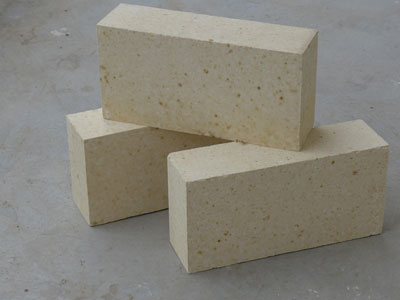
Circulating fluidized bed boilers are mainly used in the power, petrochemical, and waste incineration industries. During boiler operation, the high-temperature gas and solid particles in the gas cause severe wear to the refractory linings of various parts, including the furnace and circulation system. Therefore, the wear resistance and insulation requirements of the linings in each part are critical to boiler operation.
Wear-resistant Refractory Materials for Circulating Fluidized Bed Boilers
The lower dense phase zone of the furnace is a severely worn area in circulating fluidized bed boilers. This zone has coarse bed material, high concentration, fast fluidization velocity, and a somewhat corrosive combustion atmosphere. The wear-resistant refractory castable used in this area requires good wear resistance, thermal conductivity, and resistance to thermal bursting and thermal shock. Steel fiber wear-resistant refractory castables are recommended.
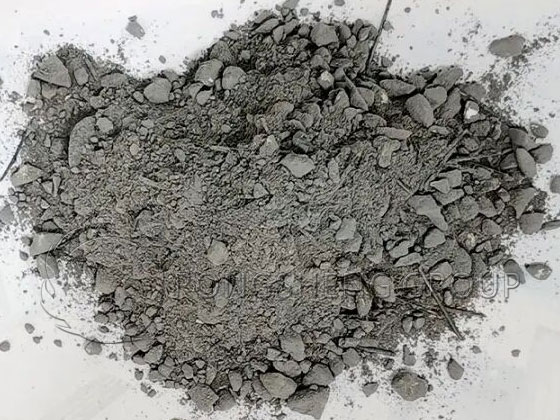
The inlet flue of the separator experiences a change in airflow direction, resulting in finer ash particles at a high concentration. The airflow velocity is typically 4.5~6.0 m/s, and the temperature is 850~950℃. The combustion atmosphere is oxidizing, leading to severe abrasion and erosion. The castable must possess good wear resistance, resistance to thermal bursting, and thermal shock resistance. Steel fiber wear-resistant refractory castables are recommended.
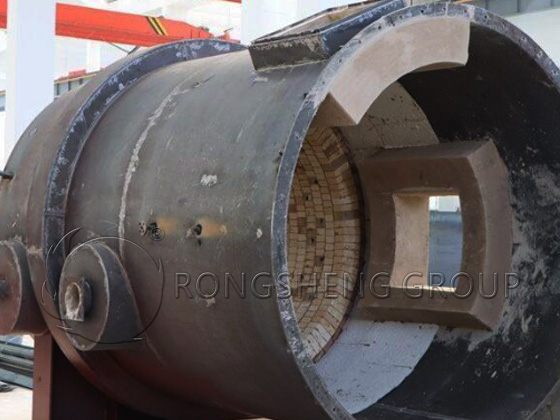
The high airflow velocity inside the cyclone separator causes coarse particles in the airflow to collide with and separate due to centrifugal force, resulting in severe wear at the separator inlet and the inner wall of the cylinder. The working temperature inside the separator is less than 1000℃, and the refractory and wear-resistant layer is relatively thick, with an oxidizing atmosphere. The castable must be lightweight, dense, wear-resistant, and have good thermal insulation properties (for insulated separators), as well as good resistance to thermal bursting and thermal shock. High-strength wear-resistant refractory castables or wear-resistant refractory plastics are recommended.
The return feeder sends the ash separated from the separator into the furnace for circulating combustion. The return feeder has a fluidized bed on one side and a moving bed on the other, forming a fluidized sealed ash feeding device. The fluidization velocity is less than 1 m/s, the bed material is fine and highly concentrated, and the working temperature is around 900℃. Compared to other parts, the working environment of the return feeder is not too harsh, but construction in this area is difficult. No combustion occurs inside the return feeder, requiring the castable to have good thermal insulation, resistance to thermal bursting, and thermal shock. High-strength wear-resistant refractory castables are recommended.
Power plant boilers have screen-type heating surfaces (water-cooled screens and superheated screens) arranged inside the furnace. The lower elbows of these screens are subject to erosion and wear from ash particles, requiring castables with good wear resistance and thermal conductivity. High-strength wear-resistant refractory castables are recommended.
The wear-resistant refractory castables for fluidized bed boilers differ from traditional castables in that they are easy to construct, have high early strength and high strength at medium and high temperatures. After being constructed at room temperature and naturally cured for 24 hours before demolding, followed by another 24 hours of self-curing, the strength reaches over 40 MPa. After drying at 110℃, the strength reaches the grade standard value, and the strength continues to increase with temperature. It also exhibits good wear resistance and thermal shock resistance. In contrast, traditional castables, while reaching high temperatures after drying at 110℃, show a decrease in strength with increasing temperature, resulting in low hot strength, poor wear resistance, and poor thermal stability, thus failing to meet the requirements of circulating fluidized beds.
Construction Process of Refractory Lining for 440T Fluidized Bed Boiler
Construction Sequence
- (1) Welding of Wear-Resistant Refractory Material Supports.
The wear-resistant material supports for the cyclone separator cylinder, material legs, inlet and outlet flues, return valve, etc., should be welded and inspected before the wear-resistant refractory material construction. Welding of the wear-resistant material supports for the cone section of the cyclone separator can be carried out during the wear-resistant material construction. The wear-resistant material supports for the lower water-cooled wall of the furnace should be welded and inspected before the water pressure test.
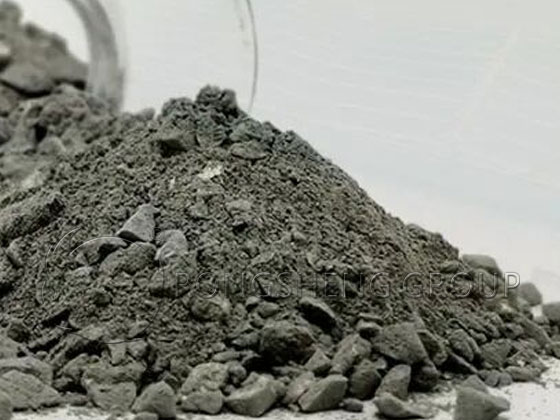
- (2) Construction of Wear-Resistant Materials for Cyclone Separators and Inlet/Outlet Flues.
Construction of the wear-resistant refractory material can begin after equipment installation and acceptance are complete. Construction starts from the bottom of the separator material legs and proceeds layer by layer upwards. The wear-resistant material construction at the outlet of the return valve can also begin after the equipment installation is completed. A steel scaffold is erected inside the cyclone separator, starting from the steel frame at the bottom of the separator material legs and extending to below the top surface of the cyclone separator. The scaffolding should be removed after all the wear-resistant refractory materials inside the cyclone separator have been installed. Scaffolding materials should be transported out from the inlet flue manhole, the material leg manhole, and the top of the return valve before the wear-resistant refractory material installation on the return valve shell can begin. Wear-resistant materials for the lower water-cooled wall of the furnace, the flue outlet, the secondary superheater, the hot section reheater, and the upper inlet of the tail flue must be installed only after the hydrostatic test is completed.
The wear-resistant refractory materials at the interfaces between the lower water-cooled wall of the furnace and the return valve inlet leg, the furnace flue outlet and the cyclone separator inlet flue, and the upper inlet of the tail flue and the cyclone separator outlet flue should be installed continuously.
Construction Method
- (1) Installation of Refractory Bricks
All brickwork surfaces within the circular areas of the cyclone separator, return valve, and material leg, made of steel plates, must be laid in a circular shape.
Wear-resistant refractory bricks, refractory insulating bricks, and insulating bricks should use wear-resistant refractory mortar, refractory insulating mortar, and insulating mortar as joint mortar, respectively.
Pre-lay the bricks to ensure they are completely suitable before starting the actual laying. Apply a layer of mortar to all joints of the wear-resistant bricks.
The gaps in the hook grooves of the hook bricks should be completely filled with mortar.
Use a mixer to mix the mortar. The mortar must be free of any lumps, dry ash, or foreign matter. Clean the mortar mixer thoroughly after each shift. The mortar should be evenly spread on the surface of the bricks, flowing smoothly without dripping. When laying the bricks, gently rub them to ensure a tight fit, and gently tap them into place with a rubber mallet to ensure adequate joint spacing. Apply sufficient mortar. The mortar between bricks should be completely full, and the joints should be uniform, with a thickness of 1-2 mm. All bricks should be staggered during the masonry process. When building the furnace brick wall, any mortar squeezed out from the brick wall surface should be removed immediately.
Bricks shorter than 1/2 of their length should not be used during masonry. Thick bricks should be cut using a brick saw for wet cutting; chiseling or hammering is not permitted. If a small amount of brick needs to be removed from the flat or end face of the wear-resistant brick, it should be ground with a grinding wheel. During transportation and handling, the edges of the wear-resistant bricks should be protected from damage.
- (2) Installation of Castable Resin
All metal surfaces in contact with the castable resin should be coated with asphalt or wrapped with ceramic fiber paper.
The castable resin must be mixed using mechanical forced mixing. Generally, dry materials should be mixed for 3-5 minutes until the color is uniform before adding water for wet mixing. The amount of water added to the wear-resistant castable resin should be 6-8% of the total weight, and the wet mixing time should be 3-5 minutes, until the material can be kneaded into a ball but does not flow as slurry, and the color is uniform. Each batch of mixed material must be poured within 40-45 minutes. Any remaining material must not be returned to the mixer for remixing. When pouring the furnace bottom, a plate vibrator should be used continuously, with overlapping edges to prevent missed areas. If a vibrator is used, it should be vibrated evenly. The vibrator must not collide with the formwork, anchors, or insulation layer. The mixer must be cleaned before starting mixing to remove any contaminants, and the water used for mixing must be clean.
Before pouring the castable, the formwork should be properly erected. The formwork should have sufficient strength to prevent deformation or movement due to material pressure and vibration. All formwork joints should be sealed to prevent grout leakage. The mold frame should have waterproof material or release agent applied to the internal parts in contact with the castable. The formwork surface should be smooth and the joints tight.
Abrasion-resistant castables must be mechanically vibrated using a vibrator until the material surface shows signs of grouting. Vibration must not create voids. Lightweight castables do not require vibration. In corners that are difficult to reach with a vibrator during construction, manual filling should be used, followed by tamping with a rod to ensure even distribution and compaction. The hand-cast refractory containing steel fibers should be mixed to a consistency that allows it to be formed into a ball without leaking through the seams. The joint surfaces of the completed lining should be roughened and impurities removed, then moistened with water. Construction can only proceed after the refractory has fully absorbed water.
After the refractory is completed, non-load-bearing surfaces can be demolded after 12 hours, and load-bearing surfaces after 24 hours. After demolding, water should be sprayed every 30 minutes for 48 hours.
- (3) Construction of the abrasion-resistant plastic
Tapping is the primary method, using a pneumatic hammer tamping machine or a rubber mallet for manual tamping. The abrasion-resistant plastic must be applied to the required thickness in one pass; layered application is not permitted.
- (4) Material Mixing and Transportation
A refractory mixing station should be set up at the zero-meter ground level of the boiler. The mixed materials should be transported to the construction site in clean metal containers for pouring. Wear-resistant refractory materials are transported to each platform via construction elevators. After horizontal transport, they are entered into the work area using pulleys and cages from the top of the cyclone separator, the inlet flue manhole, the outlet flue manhole, and the material leg manhole.
Post-construction furnace drying
After construction, the furnace must be dried to heat-cure the wear-resistant refractory materials. An inspection should be conducted after heat curing; there should be no gaps. The surface should be smooth, free of pitting, obvious cracks, and “peeling,” and the wear-resistant refractory materials should be free of looseness.